Cracked Heels The first time you see the cracks they are small. Thin white lines spread across your heel like a dried riverbed. At first you can easily ignore them. Maybe they came from walking barefoot in the house or from those new sandals you wear all the time. But then one morning when you step out of bed the floor feels rough against your skin. There is a sting and a slight pull. The cracks have grown deeper and feel a little sore. Sometimes they even snag on your socks. A thought quietly settles in your mind that it is time to do something about this. Dry cracked heels have a way of sneaking up on us. We usually notice them only when they already feel uncomfortable. Every step reminds us that our feet have been asking for care for a while. They carry us through long days and busy routines. The good news is that relief does not require expensive treatments or complicated routines. Some of the most effective remedies are probably already in your kitchen. They wait in familiar jars & bottles you use every day. This is about paying attention to your heels again. It is about turning the end of your day into a small calming ritual. You can use simple ingredients like oil and honey and milk & salt to soften neglected skin. These natural remedies help cracks heal gently over time.
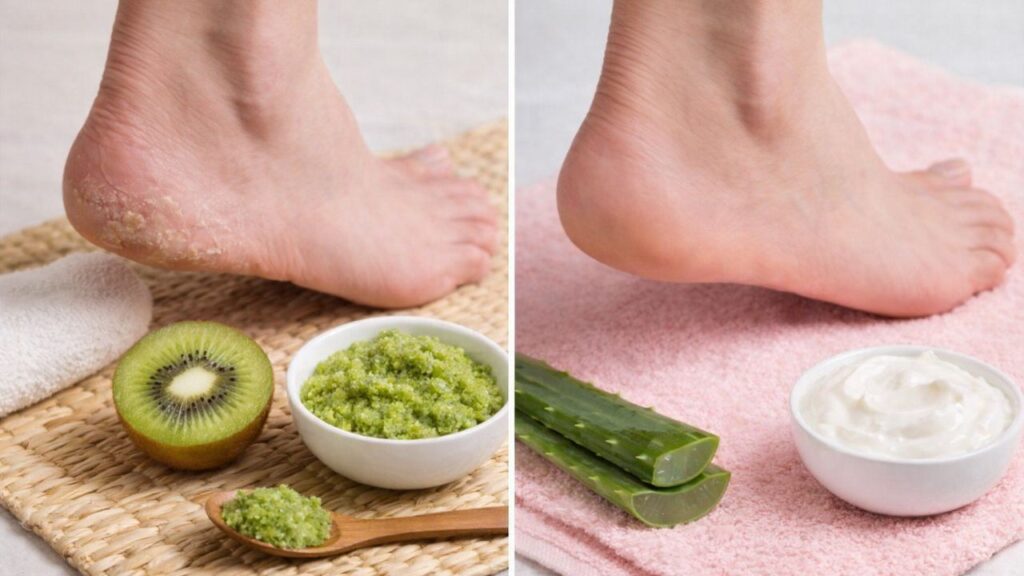
The Hidden Story Your Heels Are Telling
Your heels carry more responsibility than most people realize. With every step, they absorb pressure, balance your body, and handle constant friction. Because they are usually covered and out of sight, it’s easy to ignore them until discomfort appears. Roughness felt during a shower often gets postponed for “later,” but your skin keeps recording every bit of stress it goes through. Dry, cracked heels are often a sign of repeated pressure, rubbing, and lack of moisture. Walking barefoot on hard floors, wearing thin-soled or open-back shoes, long hot showers, cold weather, and indoor heating all strip moisture away. Heel skin is naturally thick for protection, but once it loses flexibility, it stops bending smoothly and begins to crack, sometimes painfully. Thankfully, skin is designed to repair itself when given moisture, softness, and protection.
Your Kitchen as a Simple Healing Space
Your kitchen is more than a place to cook—it’s a small self-care corner waiting to be used. Olive oil from your shelf works as a natural moisturizer for rough skin. Honey helps draw moisture into dry areas and calms irritation. Milk and yogurt gently soften flaky skin, while sugar or salt mixed with oil creates an effective exfoliating scrub. Using familiar kitchen ingredients feels comforting because they are simple, recognizable, and free from confusing labels. These everyday items can support your skin naturally when used with care. Understanding how each ingredient helps allows you to treat your heels gently and effectively without needing expensive products.

| Natural Ingredient | Heel Care Benefits | Recommended Use |
|---|---|---|
| Olive Oil / Coconut Oil | Penetrates deeply to hydrate cracked heels and soften hardened skin | Night-time massage, nourishing base for DIY scrubs |
| Honey | Locks in moisture, calms irritation, and encourages skin repair | Healing mask mixed with warm milk or natural oil |
| Milk / Yogurt | Gently loosens dead skin cells using natural lactic acid | Soothing foot soak or creamy softening pack |
| Sugar / Salt | Exfoliates rough layers and smooths uneven heel texture | Foot scrub applied after soaking feet in warm water |
| Banana / Avocado | Feeds skin with vitamins and healthy fats for deep nourishment | Thick hydrating mask for very dry or cracked heels |
A Gentle Evening Ritual for Cracked Heels
This routine is best done in the evening, when the day slows down and your body can relax. In just fifteen calm minutes, you can give your feet the care they’ve been waiting for.
Warm Milk and Salt Foot Soak
Fill a basin with comfortably warm water. Add half a cup of milk, one or two spoons of salt, and a small drizzle of olive oil. Place your feet in the soak for ten to fifteen minutes. The warmth relaxes the skin, milk softens dry patches, and oil begins restoring lost moisture, preparing your heels for further care.
Gentle Scrub to Smooth Rough Skin
Create a thick paste by mixing sugar or fine salt with olive or coconut oil. Gently massage this mixture onto your heels using slow, circular motions, focusing on rough areas. Avoid scrubbing harshly, as cracked skin responds better to patience than pressure. Rinse your feet with warm water once finished.

Honey and Yogurt Healing Mask
Combine one tablespoon of honey with one tablespoon of thick yogurt and a few drops of oil. Apply the mixture generously to cracked areas and leave it on for ten to fifteen minutes. This mask deeply hydrates, soothes irritation, and supports skin repair. Rinse gently and pat your feet dry with a soft towel.
Overnight Oil Treatment for Deep Healing
Before bedtime, warm a small amount of olive oil or coconut oil and massage it into your heels for several minutes. Put on clean cotton socks to lock in moisture overnight. By morning, your heels will feel noticeably softer, smoother, and far more comfortable than before.
Daily Habits to Prevent Cracks from Returning
Once your heels improve, simple daily habits help maintain them. Moisturize your feet after showers, avoid very hot water, rotate your footwear, and stay hydrated throughout the day. Address dryness as soon as it appears. These small actions prevent minor dryness from turning into painful cracks.
When Home Remedies May Not Be Enough
If heel cracks become deep, painful, bleeding, or fail to improve with regular care, professional advice is important. Certain health conditions can slow healing, and a doctor or podiatrist can recommend suitable treatment. While home remedies are effective for many cases, medical guidance ensures proper recovery. With warmth, moisture, patience, and consistent care, your heels can return to a comfortable, healthy state and continue supporting you every day.